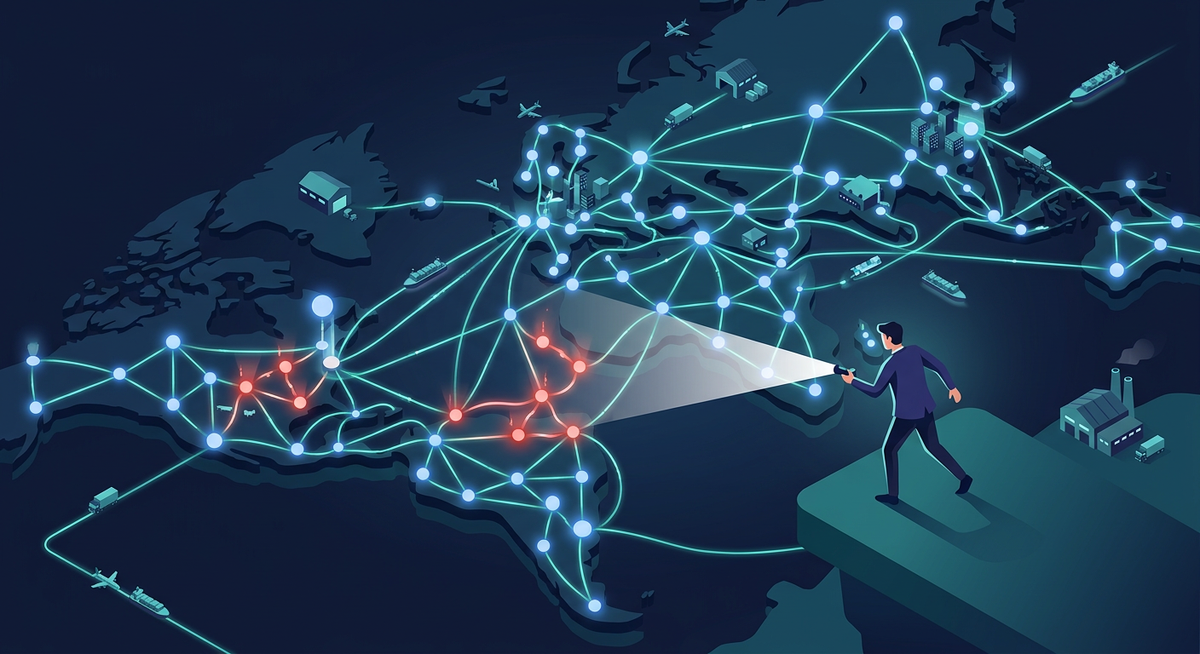
Most companies are flying blind on their own suppliers.
They’ll spend weeks scrutinising a potential client before signing a contract — credit checks, director searches, the works. Then they’ll onboard a critical supplier based on a two-minute Google search and a gut feeling.
That asymmetry is quietly expensive.
UK insolvency rates hit a 30-year high in 2023. They’ve barely improved since. Which means right now, somewhere in your supply chain, there’s a company that filed dormant accounts two years running, changed directors three times in 18 months, and hasn’t updated its registered address since the pandemic. You probably don’t know which one.
The shift we’re seeing — and it’s accelerating — is that smart businesses are treating company data as a continuous signal, not a one-time checkbox. Not “we checked them when we onboarded them.” But actual monitoring. Watching for the quiet indicators that something’s changing before it becomes your problem.
This isn’t compliance paranoia. It’s just good commercial sense dressed up in data.
The companies winning at this aren’t necessarily bigger. They’re just closer to the information. They know when a key partner files accounts late. They notice when a director with a history of dissolved companies joins a business they care about. They act on it.
The interesting question isn’t whether company intelligence matters — it obviously does. It’s why so many businesses still treat it as a one-off due diligence exercise rather than an ongoing business function.
What’s your take — is real-time company monitoring becoming standard practice in your industry, or is it still seen as niche?
See what continuous company intelligence actually looks like: https://borsch.ai