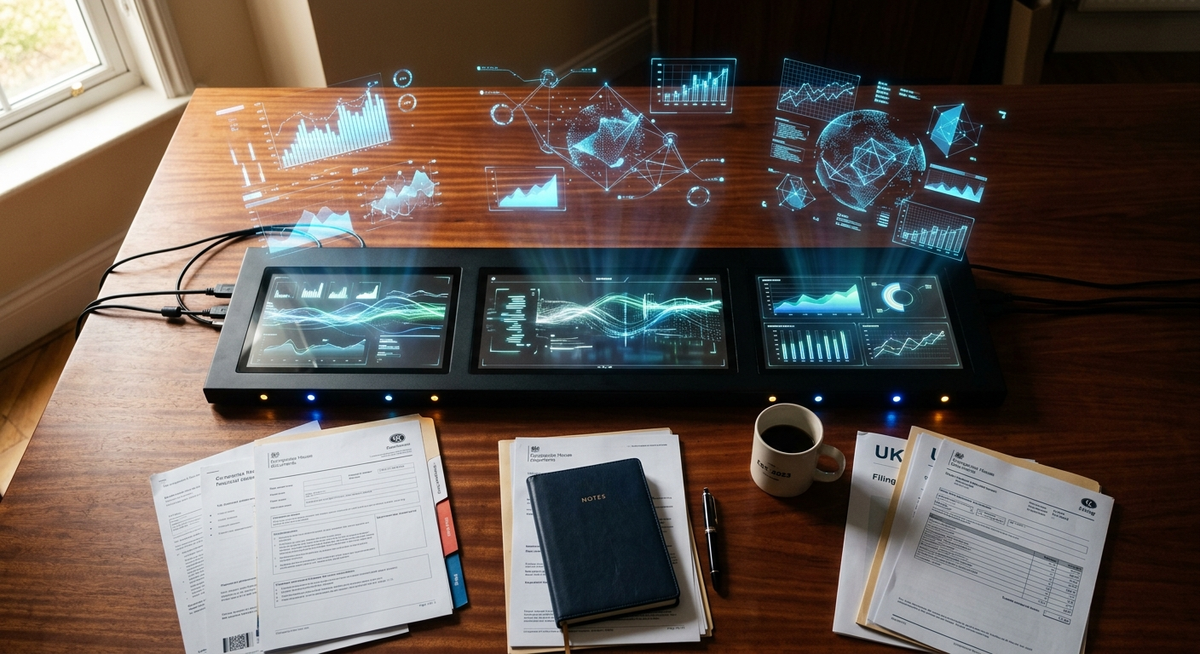
Most investment decisions are made on historical data. Which means most investors are essentially driving by looking in the rearview mirror.
Here’s what’s changing.
UK-focused funds have traditionally relied on quarterly filings, annual accounts, and periodic due diligence cycles. By the time the data lands on your desk, it’s already months old. You’re not analysing a company — you’re analysing a photograph of a company that no longer quite exists.
Real-time monitoring flips this entirely.
When a portfolio company quietly appoints three new directors in a single week, that’s a signal. When a previously dormant holding files accounts showing a sudden cash injection, that’s a signal. When a competitor you’ve been watching changes its registered address and drops two key officers in the same month — that’s definitely a signal.
None of these events make headlines. They don’t show up in press releases. But they all appear in company filings the moment they happen.
The funds getting ahead of this aren’t necessarily smarter. They’re just faster. They’re building monitoring infrastructure around their watchlists so that meaningful changes surface automatically, rather than getting buried in someone’s quarterly review pile.
The practical edge is significant: catching a portfolio company’s early distress signals before they become obvious. Identifying a target’s growth trajectory before the next funding round inflates the valuation. Spotting management instability before it becomes a risk event.
The information is public. It’s always been public. The difference now is whether you have the infrastructure to actually use it in real time.
If you’re running a UK-focused fund and you’re still working from static snapshots, it’s worth rethinking that approach.
Explore what real-time monitoring looks like in practice: https://borsch.ai
Comments